Bhutan is a unique destination and exclusive largely because of its antiquated Buddhist legacy. It is, in fact, the last outstanding example of a Himalayan Buddhist culture that once spanned both sides of the Himalayas. In Bhutan, this tradition continues to thrive as part of daily life and one of the best ways to experience the essence of this ancient culture is by attending the Tshechu or religious celebration that is watched the whole way across the country on various dates.
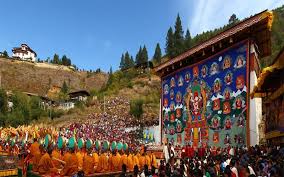
Tshechus pays tribute to Guru Padmasambhava, the Indian tantric ace, who introduced Buddhism in Bhutan in the eighth century and most Tshechus including the Paro Tshechu keep alive a convention that is a few centuries old and gives a significant association with the past for a quickly evolving Bhutan.
If you might want to go to such a festival in spring 27th March – 31st March 2019, when the weather is full of blue skies and plenty of sunshine, at that point the Paro festival tours packages the ideal choice best service provider Aster Tours and travel.
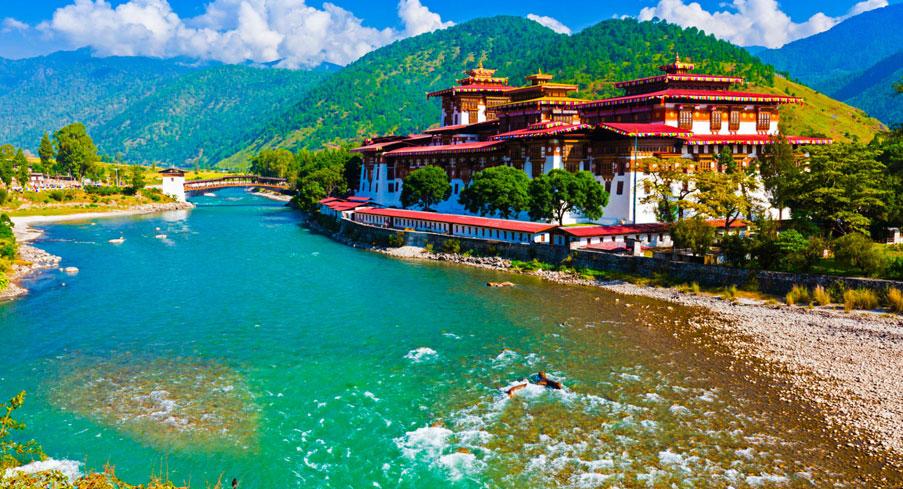
The Paro Tshechu is Bhutan’s greatest attraction in spring and a major or draws for tourists. There’s nothing more needed than before the agriculture season picks up steam, which implies that in the past people in Paro valley had time to attend the important religious and social occasion as a family and a community. Paro has always been a blessed valley, wonderful and ripe and is where Guru Padmasambhava visited in the eighth century to reflect.
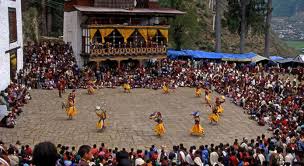
During the Tshechu holy moves in brilliant covers and ensembles are performed to the backup of religious instruments in the yard of the seventeenth century Paro Ringpung Dzong or the fortification of the “pile of gems.” The scene itself is an overwhelming structure and brimming with history. The establishing of the Paro Dzong goes route back to the fifteenth century offered the zone in Hungrel to a descendant of Phajo Drugom Zhigpo who set up the Drukpa Kagyu school of Buddhism in Bhutan. At first, a little sanctuary remained there and later a five stories structure was fabricated, which was known as the Hunger Dzong. In the seventeenth century, the structure was offered to Zhabdrung Ngawang Namgyal who brought together Bhutan. In 1644 Zhabdrung destroyed the old structure and established the frameworks of the new Dzong, which was sanctified two years after the fact as the authoritative and ascetic focus in the valley and the Tshechu initiated as a yearly occasion.
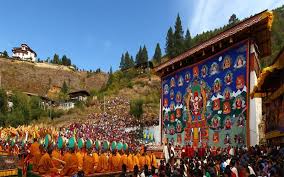
People of Paro valley and of the neighboring districts in their customary best attend the festival, which is a social event as much as it is a religious occasion. The five-day festival like an open-air theater where significant Buddhist lessons are passed on through move and dramatization. It even has a judgment day scene in the presence of the lord of death, dressed in black and in a semi flying mask.
Getting a seat on the two airlines that fly into the country and hotel accommodation becomes a major challenge because of the rush to attend the festival
The feature of the Tshechu is the unfurling of the giant tapestry of Guru Rinpoche on the most recent day of the festival. The spreading out of the Thangkha starts at three toward the beginning of the day and in brought down as the first rays of the sun touch it. Bhutanese believe that viewing the Thangkha will cleanse one of all sins.
 ASTER TOURS & TRAVEL